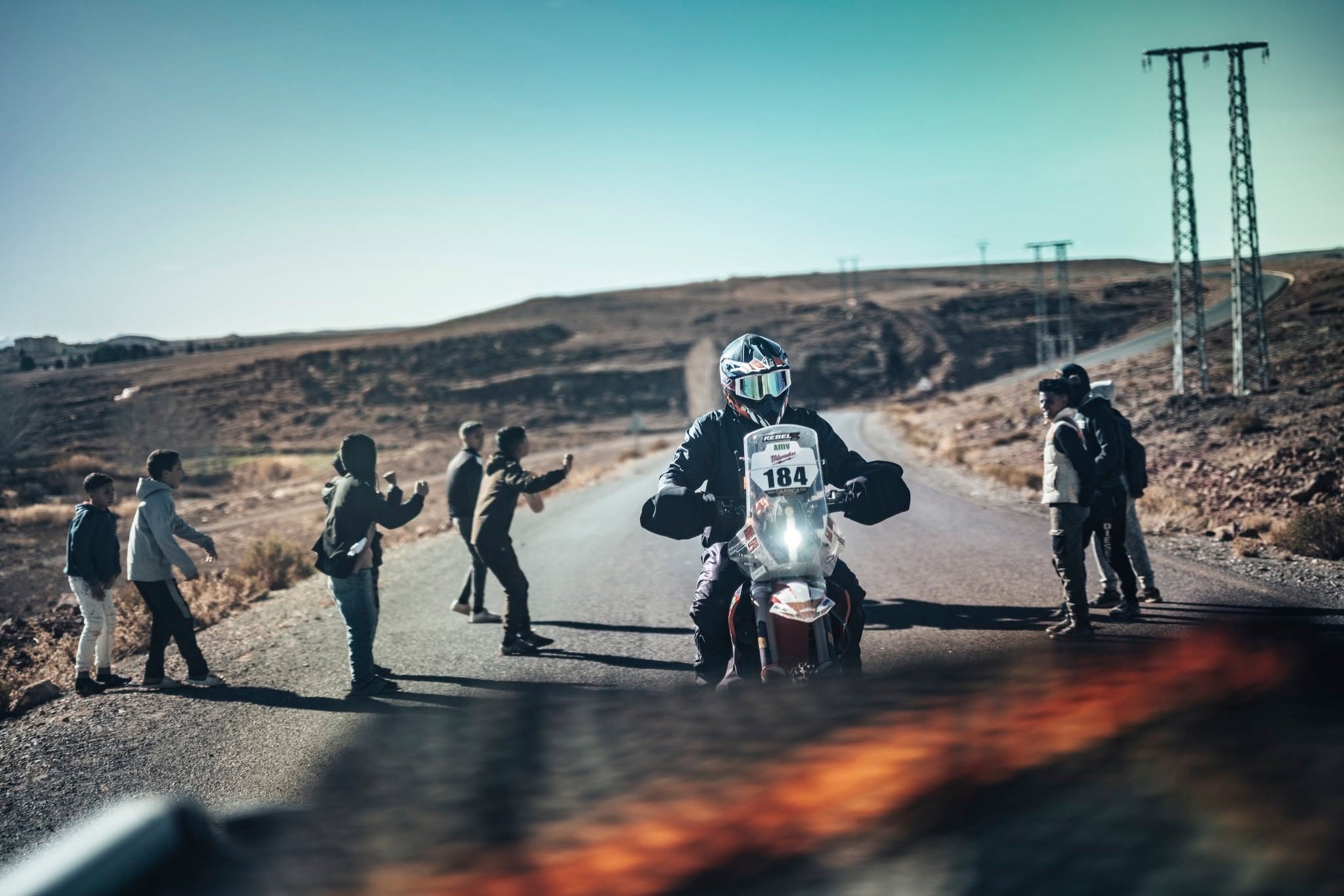

The Dakar Rally returns to Africa in January 2027, and it is happening at breakneck speed. After organizer ASO and the Saudi Motorsport Company decided on 25 October that the Saudi Arabian edition could not go ahead, ASO presented a new route on 30 October: a prologue and a first stage in Portugal, followed by eleven stages in Morocco and a finish in Marrakech on 23 January.
A day later, on 24 January, the Africa Eco Race begins in Tangier. That gives Morocco two major rallies in a short span, in a month when the weather can be unpredictable, on a route that partly runs through disputed territory, and at a moment when the UN peace mission in that region has ceased to exist. This article lays out the known facts and looks at the risks.
A Dakar that found a new home in five days
The 2027 Dakar is an emergency solution, and ASO stresses that itself: according to the organization, the move is “exceptional and one-off.” On 25 October, ASO and the Saudi Motorsport Company announced that the edition running from 1 to 15 January would not take place in Saudi Arabia, following recent developments in the region. According to news agency AFP, this was preceded by repeated attacks on the kingdom by the Houthis from Yemen. In 2028, the Dakar returns to Saudi Arabia for its fiftieth edition.
Five days later, a new plan was in place. The 49th Dakar runs from 9 to 23 January and consists of a prologue and twelve stages. The prologue and the first stage are run near Loulé-Faro in the Algarve. This is followed by an overnight crossing of the Mediterranean to Nador, after which Morocco gets eleven stages and a rest day in Agadir. In total it covers 7,824 kilometers, of which 4,341 kilometers are special stages, spread across six bivouacs.
The route starts in Bouârfa in the northeast and follows the Atlas via Zagora to Agadir. After the rest day on 17 January it heads south to Smara, after which the area around Dakhla forms the southernmost point. Along the Atlantic coast the caravan drives back to Marrakech. It is the first time since 2007 that the Dakar is run in Africa again. The 2008 edition was cancelled on the eve of the start following security warnings about the route through Mauritania.
Race director David Castera says that despite the short preparation time “a real Dakar” has been designed. At the announcement, around 350 participants were already registered.
Two rallies, one country, one day between them
The Dakar finishes on 23 January in Marrakech; the Africa Eco Race begins on 24 January in Tangier. The 18th AER runs from 24 January to 6 February 2027, in twelve stages from Tangier via Morocco and Mauritania to Lac Rose in Senegal. Administrative and technical checks begin on 21 January in Tangier. Part of 24 January is used for scrutineering in Meknes, intended for participants and teams who cannot reach Tangier in time, particularly those coming from Marrakech. The original program still included a prologue on the city beach of Tangier on 24 January. The prologue is dropped because the scrutineering takes time and the official start on 24 January takes place later in the day than the originally planned morning. The first stage follows on 25 January. The rest day is on 30 January in Dakhla. So the Dakar finishes one day before the AER begins. According to the organization, the adjustment is needed because several participants and teams are registered for both rallies and because both events use the same service providers, who need time to prepare.
Had the Dakar taken place on its original dates in Saudi Arabia, the finish would have fallen on 15 January, nine days before the AER start. The AER dates were also already known before ASO presented the Moroccan route on 30 October: Moroccan media reported the details of the Tangier start as early as 21 and 22 October. The organization points out that the Dakar move only became known after the AER calendar had been set. The Meknes solution does not fix everything: anyone who finishes the Dakar on 23 January in Marrakech still has to go through scrutineering on 24 January, and the service providers who work both events have less time between the two.
Criticism is also being voiced in Morocco itself. A Moroccan commentator calls it incomprehensible, in a public reaction, that the Dakar is allowed to run in the country until a day before the AER start. According to him, many Moroccan professionals normally work on several international rallies and now have to choose one event, because they cannot be in Tangier in time for the preparations. He also points to the residents of the regions being crossed and to the services being deployed: between two caravans they need time to complete their task and start again. He says he is not against the Dakar coming, but asks for the schedule to be revised and for a reasonable separation between the two events.
January is not October
The weather is the first uncertain factor, because the Dakar runs in Morocco in a different season than the one in which the country is used as a training ground. The Rallye du Maroc, which serves as a dress rehearsal for the Dakar, is on the 2027 calendar from 24 to 29 October as the final round of the rally-raid world championship. The Dakar now gets the same country in winter.
The AER knows what that can mean. The 2024/2025 turn-of-the-year edition (28 December to 12 January) lost a stage in Mauritania: after a sandstorm on the night of 8 to 9 January, the ninth stage was cancelled. The start had already been moved 50 kilometers, but even that proved too risky. In Morocco itself, the organization’s helicopters were unable to take off from Dakhla due to the weather in January 2019.
After that the AER moved to late January, but the 2026 edition also began with problems. Storm Harry held Tangier in its grip for over a week and flooded the city and surrounding area. The crossing from Marseille to Tangier was affected by the rough sea, and the transport ship carrying material for the scrutineering also arrived later. On the morning of the planned arrival day, there turned out to be considerable damage to installations in the scrutineering area. The organization therefore scrapped the prologue on the beach and the official start, partly because of the weather forecast for Sunday with persistent rain and strong gusts. The first stage from Tangier to Bousaïd was scrapped, because in the Atlas mountains there was in some places more than a meter of snow and the access road to the bivouac was impassable. As a result, the first special stage was only the second stage. Executive director Anthony Schlesser said that the weather had disrupted a well-prepared program, but that this comes with adventures of this kind.
It was also no ordinary winter. According to the Moroccan weather service DGM, January 2026 stemmed from a rare rearrangement of the pressure systems over the North Atlantic. In the same period there was a record amount of snow in the Atlas, including in regions where snow rarely occurs. To illustrate the cold: for 16 January 2026 the weather service forecast for Bouarfa, where the Dakar sets up its first Moroccan bivouac in 2027, a minimum temperature of 1 degree and a maximum of 12 degrees. In December 2025, sudden flooding in the coastal town of Safi killed 37 people, according to local authorities after extreme rain fell in roughly an hour.
What the weather will do in January 2027 cannot be predicted, and January 2026 was exceptional according to the weather service. But the logistics also depend on it. After the first stage in Portugal, the Dakar has to bring vehicles, assistance and a large part of the infrastructure to Africa by ship. In 2026, the AER experienced a sea crossing in January being affected by rough seas.
Smara, Dakhla and a disputed territory
A considerable part of the Dakar route runs through Western Sahara. The caravan reaches Smara on 18 January and stays in the area until 22 January: five stages start or finish in that city, including a 470-kilometer special stage around Smara. The area around Dakhla is the southernmost point. ASO presents this as a journey through the whole of Moroccan territory, from north to the far south.
The status of that territory is contested. The UN has listed Western Sahara as a non-self-governing territory since 1963. Morocco calls it its southern provinces and proposes autonomy under Moroccan sovereignty. The Polisario Front, the Algeria-backed Sahrawi independence movement, wants a referendum on self-determination. After the Spanish withdrawal in 1976, both parties waged an armed conflict that ended in 1991 with a UN-brokered ceasefire. Since November 2020, when the Moroccan army cleared a road near Guerguerat blocked by Sahrawi demonstrators, the Polisario considers that ceasefire ended. Since then, shelling on both sides of the sand wall has followed in succession, including on Smara: in late October 2023 a civilian was killed there, and on 5 May 2026 a civilian was wounded in an attack claimed by the Polisario. The United States, France and the European Union condemned that latter attack.
The Africa Eco Race has known this area for years. In 2018 the Polisario sent two vehicles to intercept the rally near Guerguerat, but they withdrew after pressure from the UN. In January 2020 the Polisario denounced the passage in a letter to the UN Secretary-General, and Guterres said he was concerned about the tensions. Protesters handed out pamphlets at the border, after which the rally resumed. According to the organization, members of MINURSO were present. In 2022 the Polisario called the Sahara a war zone and warned the organizers not to drive through, and for the 2024/2025 edition too the Moroccan news site Yabiladi reported threats. The rally ultimately drove through in 2020, 2022 and 2025, and will do so again in 2027 near Guerguerat. The Polisario has not yet publicly responded to the Dakar route.
Those passages took place with the UN still in the area. Since 1 November the MINURSO peace mission has been winding down, after the Security Council on 30 October adopted neither of two draft resolutions. The American proposal for an extension under the name MINUSO received eleven votes in favor and three abstentions, but foundered on a Russian veto. The Russian proposal for an ordinary extension received three votes in favor, one against and eleven abstentions. The mandate expired on 31 October. Guterres’ spokesperson said he was concerned about the risk of escalation and called on all parties for maximum restraint. Oxfam warned of risks to civilians now that the mission’s monitoring and de-escalating role is falling away.
For both rallies this is more than a diplomatic matter. MINURSO monitored the buffer zone near Guerguerat, the only land border between Morocco and Mauritania, through which the AER drives, and recorded shelling, including on Smara, where the Dakar starts or finishes five stages. For the first time since 1991 there is no longer a UN mission in the area, and therefore no neutral witness in the buffer zone.
Familiar tracks, crowded desert
Morocco is familiar terrain for rally-raid teams, and for the Dakar that is both an advantage and a question mark. The country is regarded as a testing ground par excellence. The Rallye du Maroc is the Dakar’s desert proving ground and is often seen as a dress rehearsal. Teams also come there outside the races. Ténéré Yamaha tested in Erfoud for three days in October for the Addax Rally, which was run from 25 to 30 October out of Merzouga. What that familiarity means for the Dakar is an open question. Teams and riders know the terrain and the October conditions well. They have experienced it less often in January. The Rallye du Maroc lasts less than a week; the Dakar stays in the country for two weeks.
The terrain is a risk in itself, because Morocco has less sand than many people expect. Many participants who have driven in Morocco at some point can confirm that the country is characterized by sharp stones. Overtaking is therefore a challenge and punctures are a constant threat. There are also risks along the route. It happens that young people throw stones at passing vehicles. In addition, people wanting to reach Europe climb into and onto trucks to travel along.
At the announcement, 350 participants were registered for the Dakar itself. According to Le Matin, the AER came in 2026 with almost 300 vehicles from participants and their assistance, plus all the organization’s vehicles. Both rallies also come near Dakhla: the Dakar drives into the area around the city, and the AER has its rest day there on 30 January.
The Moroccan commentator from the start of this article emphasizes exactly this point: the same services, the same suppliers and the same regions have to provide for two major events in quick succession. ASO itself says that despite the short preparation it has put together a full-fledged Dakar.
What remains open
The weather in January cannot be predicted, but on paper the calendar block is clear. From 9 to 23 January the Dakar, and on 24 January the official start of the Africa Eco Race in Tangier. Whether the weather, the disputed route and the absence of UN observers prove manageable will only become clear in January.