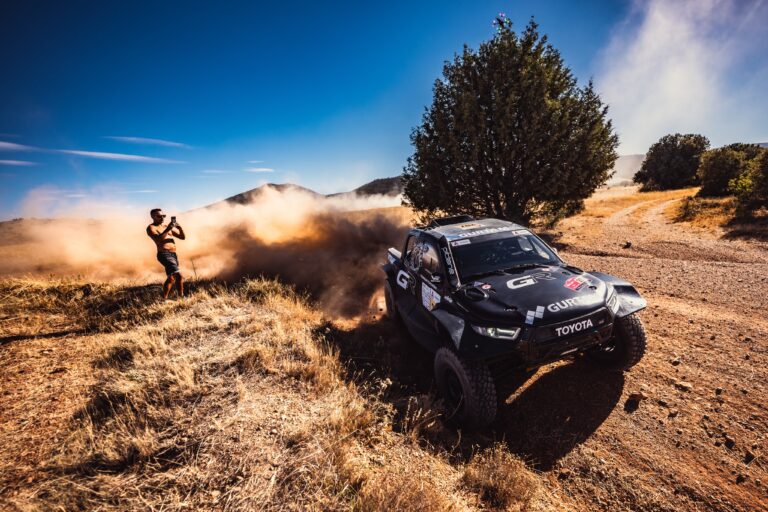

For a long time, the fact that the 2027 Dakar would not be held in Saudi Arabia was a waiting game for the Dutch participants. Since the organisers announced on 25 October that the rally was moving because of developments in the region, several scenarios had been circulating, including a shortened, unofficial eight-day Dakar in Morocco. That raised concerns about the scale and the name of the rally, and many teams had already set their plans for January in motion.
With the presentation of the new route, that uncertainty is gone. It has become a full Dakar, with a start in Portugal and eleven stages in Morocco. The Dutch reactions are predominantly positive: relief that the rally is going ahead, curiosity about the unfamiliar terrain in the south of Morocco, and satisfaction that the Dakar is closer to home, which makes it easier for sponsors, family and business relations to come along. At the same time, participants expect a rally with far more rocks than in recent years, and with more wear on the equipment.
The new Dakar in brief
The 2027 Dakar will run from 9 to 23 January and consists of a prologue and twelve stages. The total distance is 7,824 kilometres, of which 4,341 kilometres are timed special stages. The prologue and the first stage will be held around Loulé and Faro in the Algarve, with the Algarve Stadium as the centrepiece. The caravan then crosses over to Morocco, where the transfer to Bouarfa follows on 11 January.
In Morocco, the rally revolves around five host cities: Bouarfa, Zagora, Agadir, Smara and Marrakech. After the first stages around Bouarfa and Zagora, the rest day follows in Agadir on 17 January. Immediately afterwards comes the longest special stage of this edition, 500 kilometres between Agadir and Smara. Stages 8 and 9 form a marathon with a so-called Refuge Bivouac near Dakhla, after which the rally returns to Marrakech via Smara.
This is the thirteenth time the Dakar visits Morocco. Between 1993 and 2007, the rally passed through the country twelve times, accounting for 58 stages. The last African edition was the Lisboa-Dakar of 2007. The 2008 edition was cancelled because of terror threats, after which the rally was held in South America from 2009 to 2019.
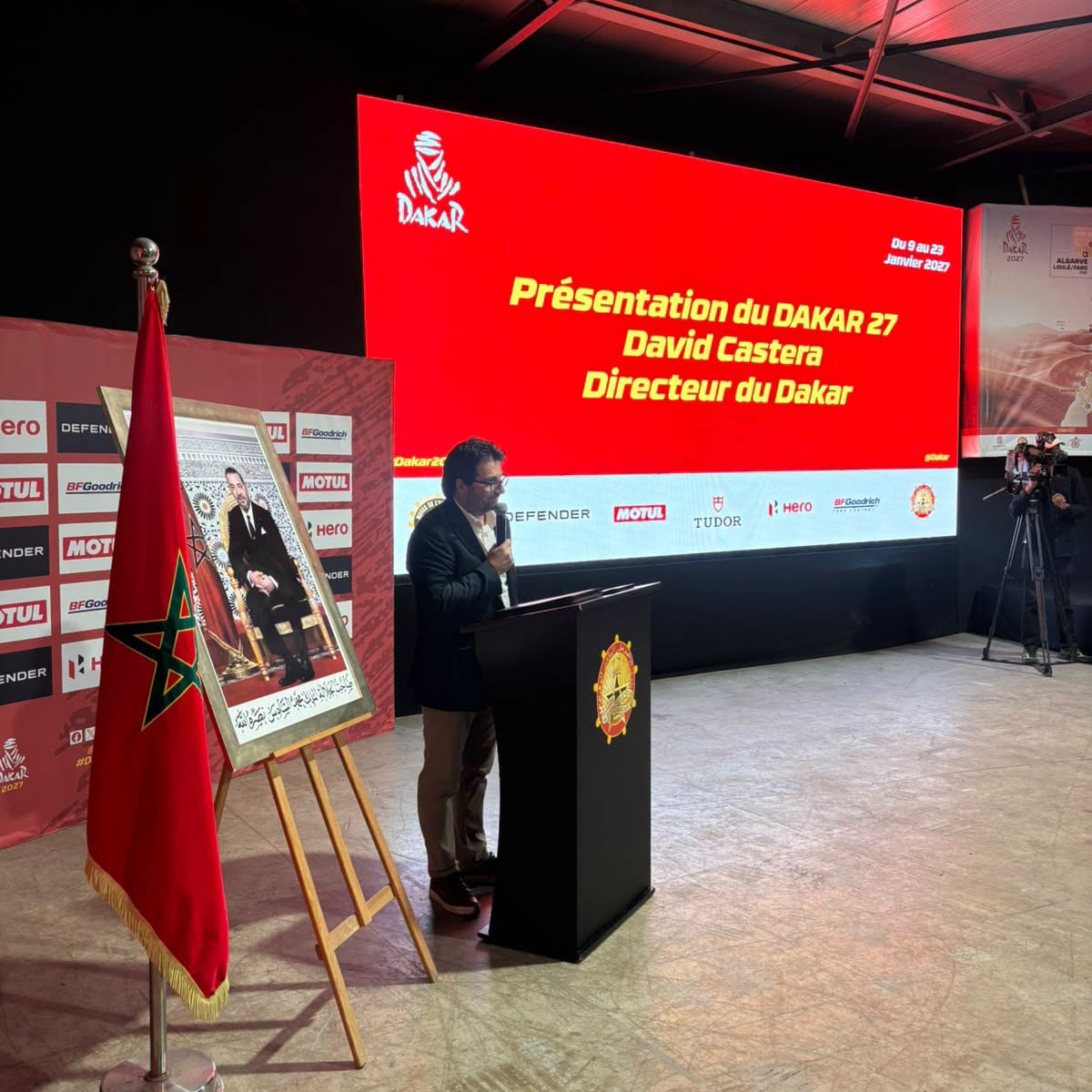
At a press conference in Casablanca, Dakar director David Castera explained the plans. Castera, who laid out the Rallye du Maroc from 2018 to 2024, sent three reconnaissance teams through the country in recent weeks. He calls the result “a real Dakar route, without compromises”, including sectors the rally has never passed through before.
Interest seems barely affected by the late change. A total of 350 participants have registered, the motorcycle category is full, the truck field is comparable to that of recent years, and more than eighty vehicles have already been confirmed for the Dakar Classic. Registration remains open until 20 November.
Mark Salomons: “Africa does have something special”
For navigator Mark Salomons, this will be his fourth Dakar and his first outside Saudi Arabia. “We had fully geared ourselves up for Saudi, but going back to Africa does have something special,” he says. When Morocco was first mentioned, he wondered how the organisation could put together a Dakar of twelve to fourteen days in a country that has already been driven so extensively. Now that the route is known, he says he is “getting the tingles”. He sees the start in Europe as a nice extra, partly because it makes the rally much more accessible for sponsors and family to experience up close.
Salomons expects the rally to take on a different character after the rest day. Heading towards Smara and further south, he will be driving through areas that are completely new to him, reportedly with a mix of fast open plains, rocks, hamada, oueds, sand and dunes. “That could be interesting with a truck.” As a navigator, he actually enjoys that unfamiliar terrain. He does hope the new areas also contain sizeable dunes, in addition to the familiar dune area around Merzouga.
He calls the reason for the move unfortunate, but mainly admires the fact that a completely new Dakar has been put together at such short notice. “We simply have to adapt and make sure we’re there. The ambition doesn’t change because of it.” Salomons, who sat next to Lex Peters in the Challenger class in January 2026, is making the switch to the truck class: he will be navigating for Kay Huzink at the new team Huzink Rally Sport, in cooperation with De Rooy. The new truck has already been tested twice, including in Morocco. They are also pleased at home: thanks to the later start, he will celebrate New Year’s Eve in the Netherlands this time.
Deen Munsters: “Glad it’s becoming an official one”
Motorcyclist Deen Munsters heard the news at EICMA in Milan, where David Castera was due to present the route at the end of the day. After all the rumours, including those about an eight-day, unofficial Dakar in Morocco, he is mainly happy that it is becoming a full edition. He also likes the start in Europe, because friends, family and sponsors can travel along more easily. He knows the area around Faro well: he has trained there a lot.
Beyond the Atlas, Munsters expects familiar rally terrain, where he already covered quite a few kilometres last year during the Rallye du Maroc. The motocross rider, who lost his left lower leg after a scooter accident, finished sixtieth there on his debut in the World Championship. He assumes the Merzouga dunes are part of the route, but would find it a shame if those turned out to be the only dunes. “Overall, I think it’s going to be another great edition.”
Tim Coronel: “A fresh surprise”
Tim Coronel responds in a down-to-earth manner. Many people asked him in recent weeks whether the rally would go ahead at all. “I say: with the French, it always goes ahead.” He calls the move “actually a fresh surprise”. For Coronel, who rode his twentieth Dakar in January 2026, Morocco is also familiar ground: his first Dakar, in 2007, went through Morocco, Mauritania, Mali and Senegal. “That’s exactly twenty years ago.”
He does not concern himself much with the background to the decision. “That’s politics. I let it slide off me. What matters is that the Dakar goes ahead.” Rally raid remains something magical and adventurous for him, whether it takes place in Morocco or in Saudi Arabia. An added benefit: because the rally is closer to home, some 150 business relations are flying over. “It will be a bit more of a team spirit, because it’s a bit closer for people.”
Gert and Kay Huzink: “Safety is the most important thing”
For Gert and Kay Huzink, the move was an important reason to register after all. “I think safety is the most important thing. And we certainly weren’t keen on flying to Saudi,” says Gert. Kay confirms that the two had in principle already decided not to travel if the rally had gone ahead in Saudi Arabia. “So I’m happy with this alternative route.”
In sporting terms, both truckers do prefer Saudi Arabia, because they would rather drive in sand and dunes. According to Gert Huzink, Morocco is a lot rockier. “You can certainly expect to need more tyres. You also have to adapt your driving style to that.” He also adds a caveat about the organisation’s short preparation time: getting all the stages properly into the roadbook in such a short time could, in his view, lead to “more oops moments”.
Kay, who finished seventh on his Dakar debut in January and won the final stage, heads into the rocky terrain with confidence. “Over the years it has become clear that the De Rooy truck is a strong and good truck, also for Morocco. The equipment will suffer more, but that is the same for everyone.” With an Iveco from Team De Rooy, he also won the truck class of the Morocco Desert Challenge this spring.
X-raid: “Time is tight, but that makes it exciting”
The international teams also welcomed the news with relief. Sven Quandt, team boss of X-raid, is mainly glad that there is clarity after a long period of uncertainty, although he calls A.S.O.’s decision very late. Many customers had already cancelled their entries for 2027 or adjusted their plans, which means the team now has to put together new programmes at short notice. In sporting terms, Quandt expects a very tough Dakar, one that will bring back memories of the editions before 2008. In his view, Portugal and Morocco offer excellent terrain for a demanding rally. At the same time, he regrets the departure from Saudi Arabia, where X-raid won the Dakar with MINI in 2020 and 2021 and with Audi in 2024. He hopes the rally can return there in 2028.