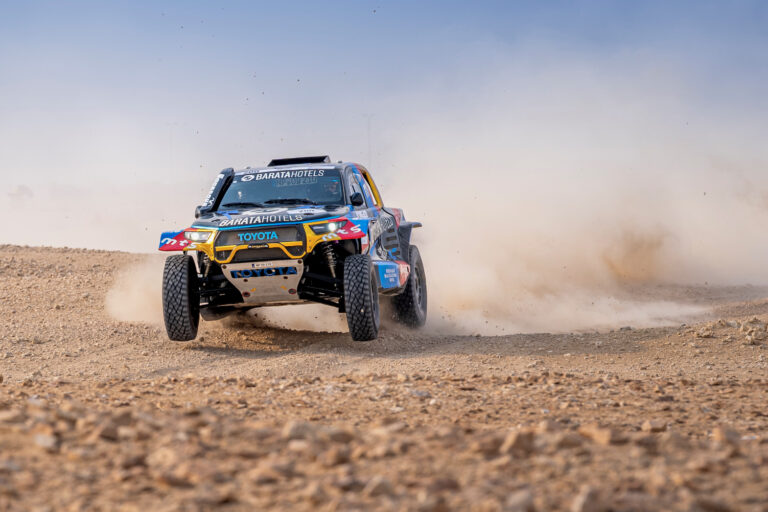

The Dakar Rally is relocating to Europe and Africa in 2027. Following recent events in Saudi Arabia, the organisers have moved the 49th edition to Portugal and Morocco. The rally will return to Saudi soil in 2028 for its 50th anniversary edition.
The Dakar Classic, the Dakar Future Mission 1000 and the Dakar Saudi Next Gen programme will follow the move. As usual, the rally opens the season of the FIA and FIM World Rally-Raid Championship (W2RC). The programme consists of a prologue and twelve stages, running from 9 to 23 January. The dates are still subject to approval by the FIA World Motor Sport Council.
Start in the Algarve
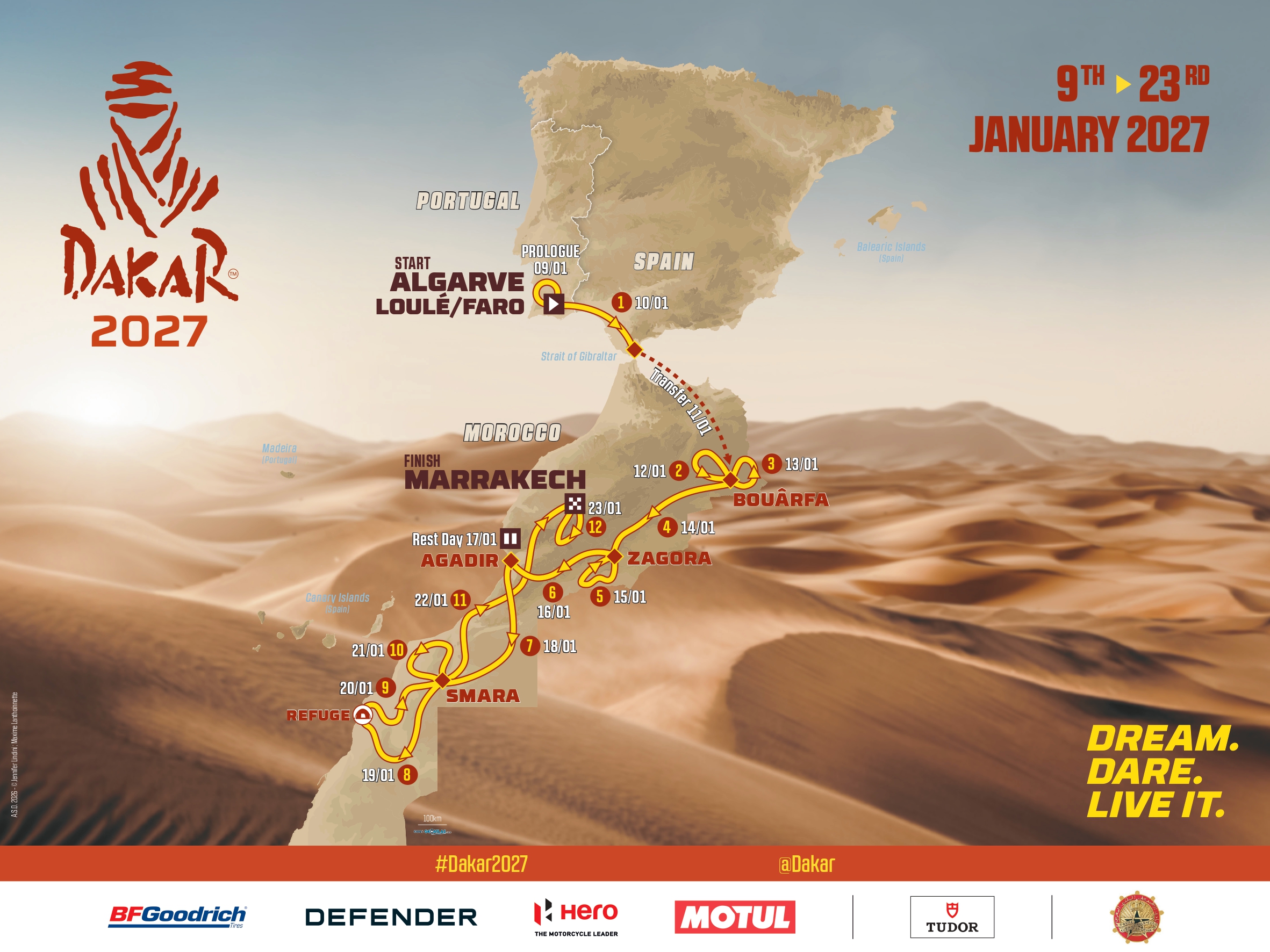
The adventure begins in Loulé-Faro, where the service park opens on 5 January, followed by administrative and technical scrutineering from 6 to 8 January. The 30,000-seat Algarve Stadium will host the start. It is familiar ground: last April, the Automóvel Club de Portugal (ACP) staged the finish of the second W2RC round there.
The prologue is scheduled for 9 January, followed a day later by the first special stage on Portuguese soil. The caravan then heads to the port, where competitors cross the Mediterranean overnight to Nador in Morocco.
Morocco from north to south
On 11 January the competitors set foot in Africa. A liaison takes them to the first Moroccan bivouac in Bouarfa, in the Oriental region in the northeast of the country. From there, the rally heads south along the Atlas Mountains, via Zagora to Agadir, where the rest day takes place.
In the second week the Dakar leaves the Atlas behind and dives into the vast deserts of the deep south. Smara and the area around Dakhla mark the southernmost points of the route. The caravan then turns north again, passing through Smara once more before following the Atlantic coast to the finish in Marrakech.
4,341 kilometres of special stages
The total route covers 7,824 kilometres, of which 4,341 kilometres are special stages. That is in line with recent editions. Most daily stages measure between 350 and 500 kilometres. Along the way, the rally will stop at six different bivouacs.
Anyone who knows Morocco knows this will be no walk in the park. Its deserts rank among the toughest in the world, for drivers and co-drivers as well as for their machines. Race director David Castera is promising an “uncompromising” Dakar.
“A true Dakar”
“Despite the short timeframe we have had to work with, we have designed a true Dakar,” says David. “Competitors will discover the Kingdom from one end to the other, through a route of unprecedented scale.”
According to David, the vast majority of competitors are choosing to follow the rally to its new destination, with 350 entries already registered. As always, the Dakar will be broadcast in more than 190 countries.