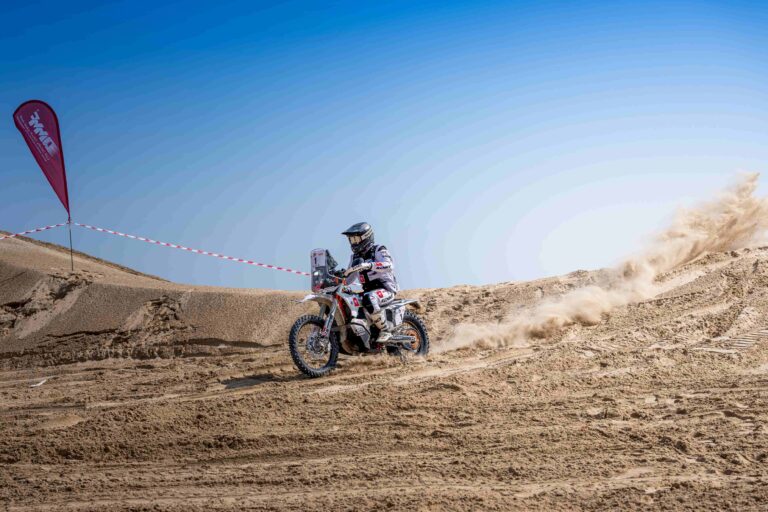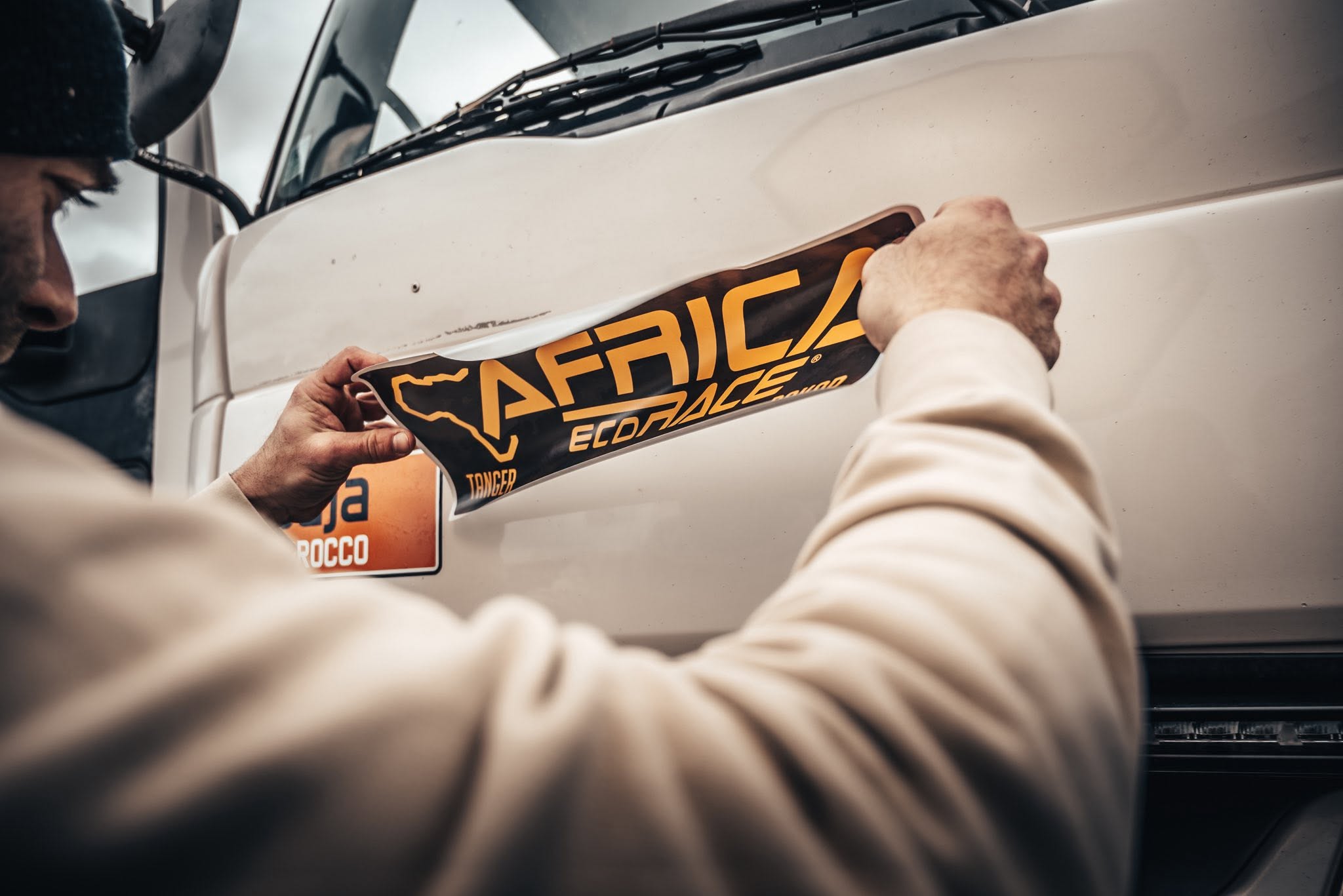

The organisation of the Africa Eco Race has adjusted the start programme in Tangier for the 18th edition, which runs from 24 January to 6 February 2027. The reason is the Dakar Rally’s move to Morocco. As a result, both rally-raids take place in the same country in January, with dates that end up brushing against each other.
The race itself remains unchanged at its core: twelve stages through Morocco and Mauritania to Lac Rose near Dakar. What changes is the day of the start. The prologue on 24 January is cancelled, the official start takes place later in the day than originally planned, and the administrative and technical scrutineering gains a second location in Meknes. For the Netherlands, several Dutch teams are once again on the entry list for 2027.
A Dakar that suddenly comes close
This is a change decided outside of the Africa Eco Race’s control. On 25 October, ASO and the Saudi Motorsport Company announced that the 2027 Dakar cannot take place in Saudi Arabia due to recent events in the region. Five days later, ASO confirmed the new format: the 49th edition runs from 9 to 23 January and consists of a prologue and twelve stages. The prologue and the first stage take place in the Loulé-Faro region of Portugal. After that, the Dakar moves through Morocco, with a rest day in Agadir and the finish in Marrakech on 23 January. It is the first time since 2008 that the Dakar is run in Africa again. Originally, the Dakar was scheduled from 1 to 15 January.
The Africa Eco Race calendar had already been known for several months. According to the organisation, both events originally lay about ten days apart, on two different continents. Now the Dakar finishes on 23 January in Marrakech, while the administrative checks and technical scrutineering of the Africa Eco Race begin on 21 January in Tangier.
What changes in Tangier
Tangier remains the starting point for the second year in a row. The start on Sunday 24 January stays, with spectators able to see the competitors up close. The organisation emphasises that this accessibility is part of the core of the rally. The programme for that day has, however, been adjusted, as the official start takes place later in the day, unlike the originally planned morning.
Part of 24 January is used for administrative and technical scrutineering in Meknes, intended for competitors and teams who cannot reach Tangier in time, particularly those coming from Marrakech. As a result, they do not have to travel north first.
Because of the time the scrutineering requires, no prologue can be run on 24 January anymore. Moroccan media had earlier reported a prologue on the city beach of Tangier. In 2026, the beach prologue had already been called off: the prologue because of rain, and the first stage as well because of heavy snowfall.
Two sticking points for the organisation
The organisation cites two reasons for the adjustment. First, several competitors and teams are entered for both rallies. The new schedule brings the risk that they will not reach Tangier in time for scrutineering. Second, both events use the same service providers and operators. They need time to prepare so that the Africa Eco Race can run under the best possible conditions.
The solution with Meknes mainly takes pressure off the teams coming from the south, but it does not solve everything. Anyone who finishes the Dakar in Marrakech on 23 January still has to go through scrutineering in Meknes on 24 January, and that leaves little room for recovery and vehicle repairs. The service providers supplying both events also have less time between the two.
At the same time, the situation is objectively not of the organisation’s making. The Dakar’s move was announced after the Africa Eco Race calendar had already been set. The organisation indicates that, following the announcement, it explored every possible solution. The loss of the prologue is a visible blow to the opening day’s programme, but the sporting format of the race remains intact.
Route and format of the 18th edition
After the start comes a route of twelve stages through Morocco, Mauritania and Senegal. The Moroccan section runs from Tangier via the southern provinces to Guerguerat on the border with Mauritania. A rest day is planned in Dakhla on 30 January. The finish is on 6 February at Lac Rose near Dakar, the lake where the Dakar traditionally ended.
The Africa Eco Race was founded in 2008, after that year’s Dakar had been cancelled and subsequently moved to South America. Since then, the event has positioned itself as a continuation of the great African rally-raids. A public celebration around the start fits that line.
Dutch entries for 2027
Several Dutch teams are already on the entry list for the 2027 edition. The list is a snapshot: some crews are not yet fully confirmed and are subject to change.
Among the motorcycles, Pim Spanjer (Offroadpim) is entered as a malle moto in the 450cc class. Memo Tours entered six motorcycles, but without names as yet. In the SSVs there are two T3 crews. Greenteam Panhuijzen entered an SSV with Tom Panhuijzen. Rogier Grouwels and Rudolf Meijer are on the start list for Shiver Offroad.
Among the cars, Shiver Offroad is entering two T1 cars: one with Michiel Becx and Sander van Barschot, and one with Janus van Kasteren jr. and Marcel Snijders. Oase Motorsport entered a T1 car, and Team Bvb is on the list with a car in the non-competitive raid category.
Among the trucks, Greenteam Panhuijzen fields Mike Panhuijzen, Pieter Kuypers and Eric Jan Hartjes, the same crew as in 2026. The Rainbow Truck Team entered two T5 trucks, but the crews are not yet filled in on the list.
Programme in brief
- 21 January: start of administrative and technical scrutineering in Tangier.
- 24 January: start in Tangier, later in the day than originally planned. Scrutineering in Meknes in the afternoon for competitors from Marrakech. No prologue.
- 25 January: first stage, in the morning.
- 30 January: rest day in Dakhla.
- 6 February: finish at Lac Rose near Dakar.