
Stage 3 of the Dakar Rally 2026 is a loop around AlUla and marks one of the first true tests of this year’s edition. Covering a total distance of 736 kilometers, participants face a full rally day where navigation, rhythm, and vehicle preservation are key. The AlUla landscape is known for its variety, and this stage lives up to that reputation.
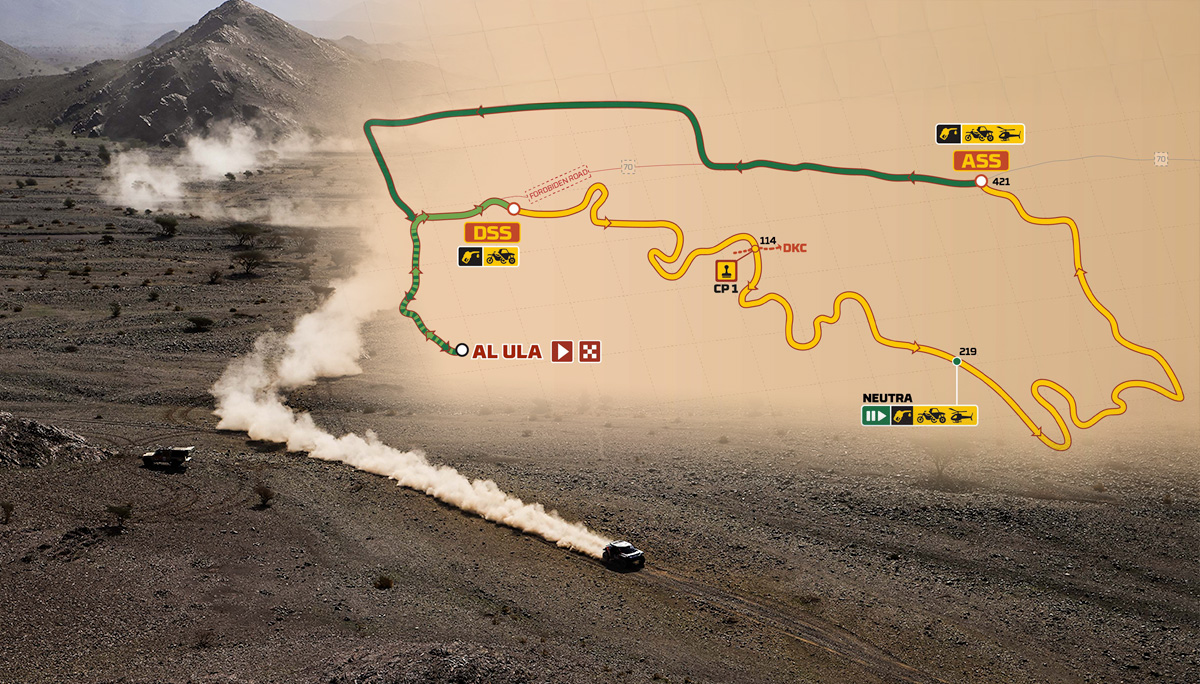
The route starts with a 64-kilometer liaison from the bivouac in AlUla, followed by a 421-kilometer special stage. After the timed section, a final 251-kilometer liaison leads back to the bivouac. This makes it one of the longest stages so far, placing significant physical and mental demands on all competitors.
Start times and daily schedule
The day begins early. The first bikes leave the bivouac at 06:00. The cars and trucks are scheduled to start at 08:15. The timed section begins at 07:30 for the bikes and at 09:45 for the cars and trucks. The last participants are not expected back at the bivouac until evening, highlighting the long and demanding nature of this stage.
Varied terrain and high navigation pressure
The stage takes competitors through the iconic sandy canyons of the AlUla region. In the opening phase, sand and narrow canyons dominate, requiring a steady pace and precise navigation. The terrain then shifts to faster gravel sections and open plateaus where tracks are hard to see, and navigation errors can happen easily.
Midway through the special, the course becomes more technical and rocky, with sections that allow little room for mistakes. After a neutralized zone, the rhythm returns on faster gravel pistes, but navigation remains a critical factor. In the final part of the stage, many tracks have disappeared due to wind and rain, leaving participants fully reliant on their roadbooks.
Key features and points of attention
The organization has identified several alert zones. These include long sandy descents, narrow rocky passages, and technical sections with cambered surfaces that are especially tricky for trucks. Around CP1, the route intersects with the Dakar Classic, requiring extra vigilance. There is a 20-minute neutralization for bikes and a 7-minute one for cars and trucks. The second liaison includes a 70-kilometer detour requested by local authorities.
Who opens the stage
Among the bikes, Daniel Sanders will be the first to take on the stage, followed by Edgar Canet and Ricky Brabec. They will be setting the pace and tracks for the rest of the field.
In the car category, Seth Quintero is the first to start in his Toyota Hilux, followed by Henk Lategan and Yazeed Al Rajhi. They face the tough challenge of finding the right lines in AlUla’s open terrain without any visual references.
First real shake-up expected
With its length, varied terrain, and complex navigation, Stage 3 is expected to be the first day where significant gaps may form in the standings. Those who make it through without mistakes and find the right rhythm can lay a solid foundation for the remainder of the Dakar Rally 2026.