
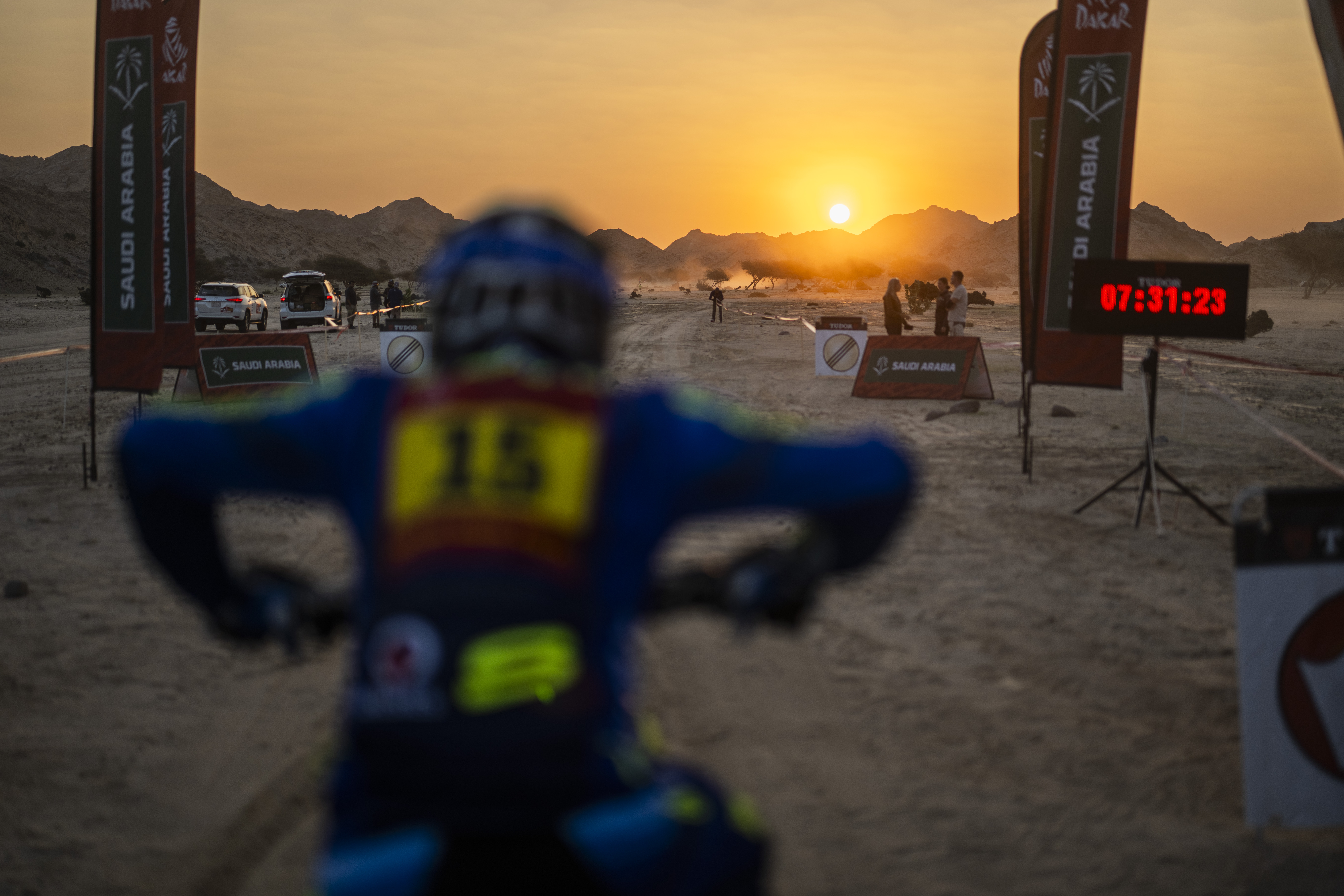

Riding at the front in the Dakar is a blessing and a curse. You have clear visibility, no dust, but you have to find your own way without tracks to follow. To compensate for this disadvantage, openers receive a time bonus. But how exactly does it work?
Imagine: you’re tearing through the Saudi desert in first place. No tyre tracks to follow, no hint of where the best line is. Behind you, dozens of competitors are simply riding in your tracks. They just need to give it gas. You have to think, navigate and sometimes just guess. That costs time.
That’s why the FIA has devised a clever system: the “Opener Bonus”. Invisible checkpoints are placed along the route, every 10 to 30 kilometres. You can’t see them, but your GPS registers when you pass them. Are you the first? Then you get compensation.
One second per kilometre
In marathon rallies like the Dakar, you receive one second bonus per kilometre for each section between two checkpoints. So if you ride 25 kilometres at the front, you get 25 seconds compensation. If the route is full of dunes (more than 60 percent), that one second per kilometre always applies, because navigating in dunes is extra difficult.
But you’re not alone. Anyone who passes the same checkpoint within 15 seconds after you also receives the full bonus. Do three riders pass within that time? Then all three of you are “openers” and all three receive the same compensation. It’s not about who is exactly first, but who is riding at the front of the group.
Automatically settled
The beauty of it: you don’t have to do anything yourself. The tracking system registers everything automatically. At the finish, the bonus is immediately deducted from your time and you see on your time card how much compensation you received. That adjusted time also determines your starting position for the next day.
Only the last 10 kilometres of a stage don’t count for the bonus. By that point, the route is usually clearly visible and the advantage of riding at the back has virtually disappeared.
The system ensures that the riders who do the dirty work (finding the way, checking navigation, choosing the best line) are not disproportionately penalised. The system makes fair competition possible, even for those who have to plot the route.

