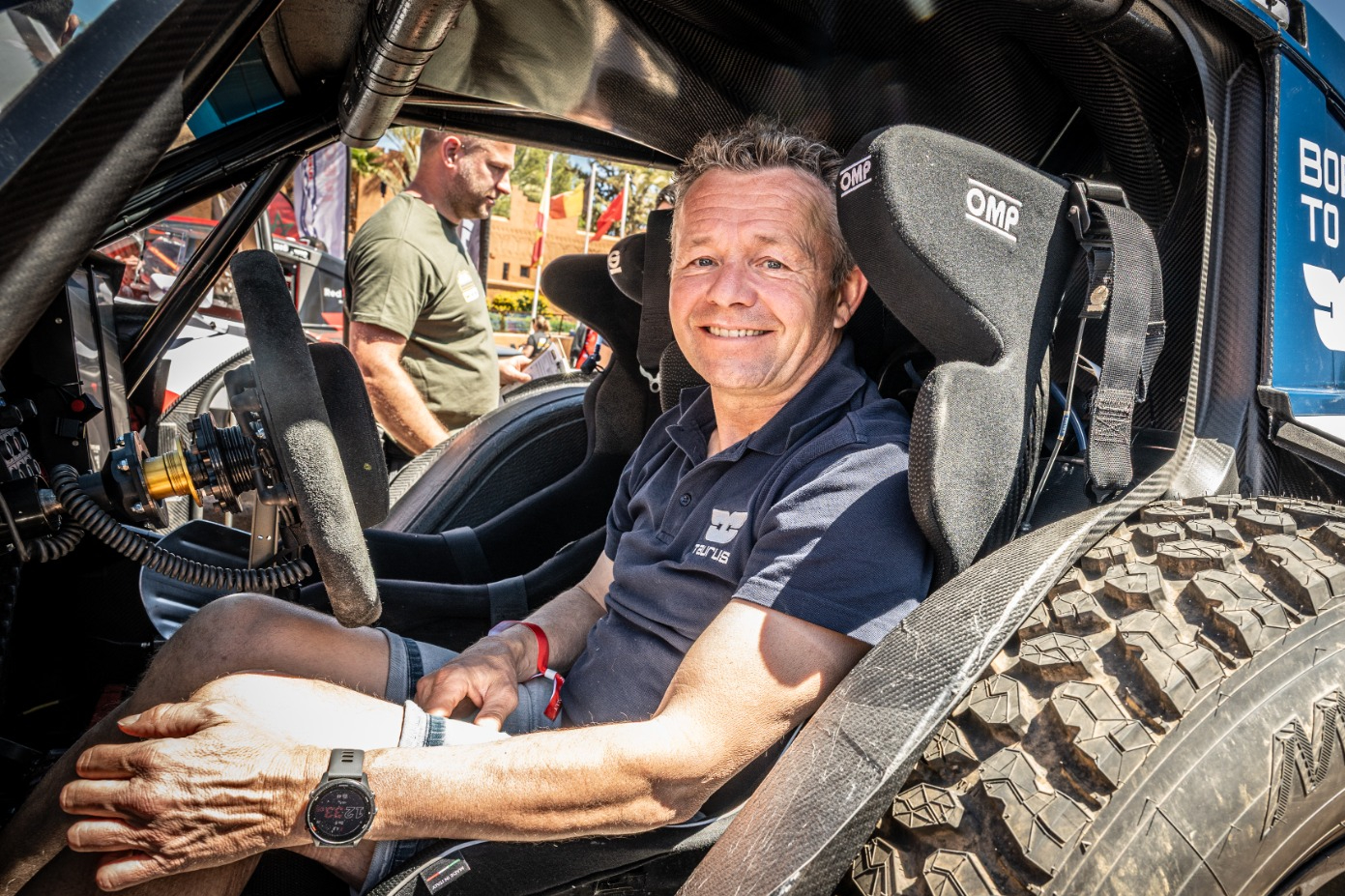

Erik Wevers was a chicken farmer by trade when he started in Dutch rallying in 1998. He founded Wevers Sport, which grew from Markelo into an established name on the rally stages, nationally and internationally. It still is: rally cars are built, prepared and maintained there, from national rallies to international championships. But alongside the rally world, a second chapter grew into something big: the Dakar Rally. It began in 2010 with an invitation in Spain and ran via a Dutch Dakar team and a factory adventure with Borgward to the Taurus. In 2026 there were 17 on the start line, and since 2024 a Taurus has won the Challenger class every year. This is that story.
An invitation that set everything in motion
In 2010, Erik Wevers lined up at the Baja Aragón in Spain in Erik van Loon’s Mitsubishi Racing Lancer. Van Loon couldn’t drive at the last moment and Bernhard ten Brinke was also due to take part, so Van Loon asked Wevers whether he would like to start in his car. It was his first taste of cross-country rallying, and it left him wanting more.
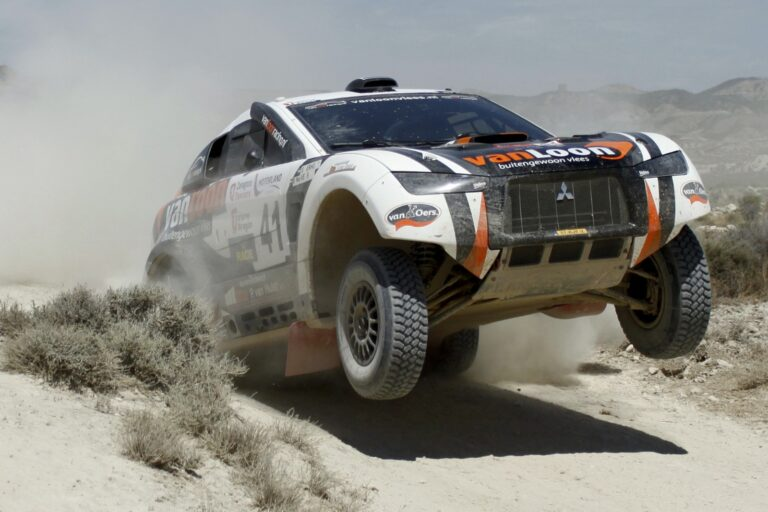
What followed was no longer a coincidence. Wevers Sport took over the remaining Racing Lancers and all the models from Nicolas Misslin and began building the cars itself. The business decision had effectively been made already. Ten Brinke and Gert Huzink wanted to go to the Dakar, and Wevers Sport was the logical partner for that dream. The company did for them what it had long done for customers in regular rallies: prepare the cars, maintain them and provide service wherever the event was held. Only now that place was among the dunes and mountain passes of South America.
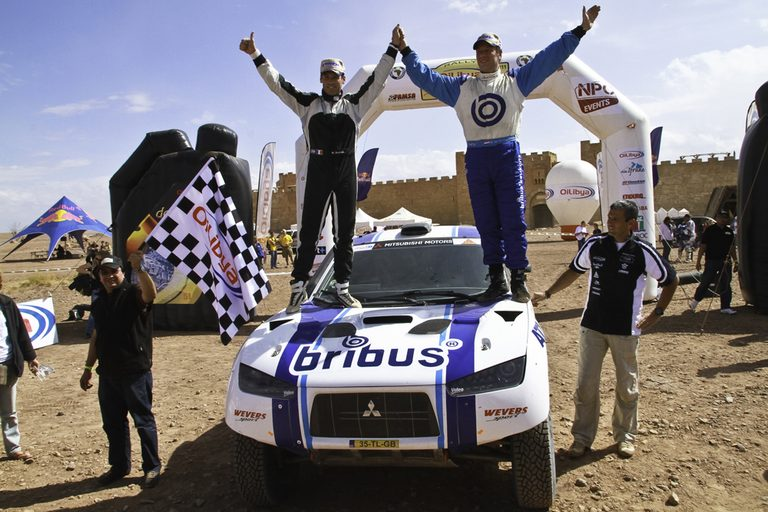
Success wasn’t long in coming. In 2011, Ten Brinke won the Rallye du Maroc in the Racing Lancer, in the team’s first year in the cross-country world. That is how the Riwald Dakar Team came about: Wevers, Huzink and Ten Brinke shared the dream of taking on the factory teams with a team of their own. In 2012 the team made its Dakar debut, and straight away with an exclamation mark: Ten Brinke finished his first Dakar in the top 10. Alongside its own team of three cars and a truck in matching colours, Wevers Sport also worked for customers such as Van Loon, just as in regular rallying, where several customers are served at the same time.
HRX Ford: Henry Racing X-country
After that first Dakar, the workshop in Markelo got to work. Changed regulations on differentials and engines called for a new driveline concept. The result was the HRX Ford, where HRX stands for Henry Racing X-country, a nod to Henry Ford. Under the skin sat a Ford V8 with an X-trac driveline and Motec electronics, in the proven Mitsubishi chassis. The conversion was done in such a rush that two of the three cars were flown to the start in Lima at the last minute.
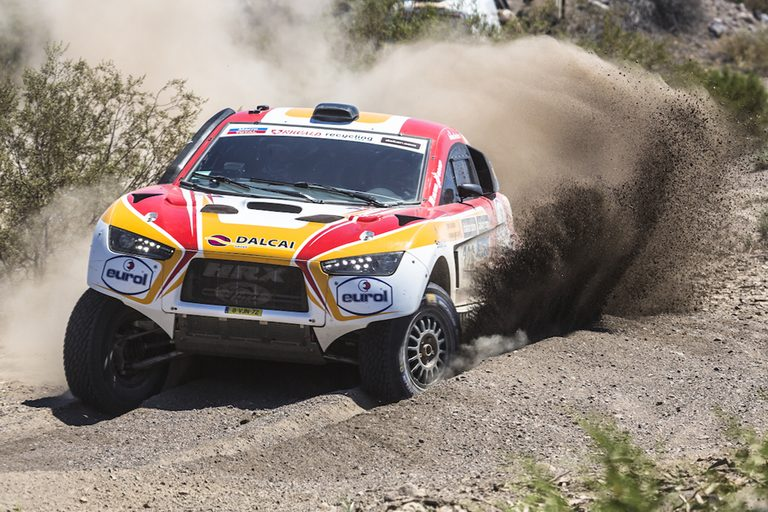
That the car was fast became clear in 2013. On a high-altitude stage above 3,400 metres, Wevers set the seventh-fastest time among the factory teams and sat twelfth overall as the best Dutchman. In 2014 there were more stages in the top 10 and top 12. Wevers, Huzink and Ten Brinke drove the HRX for Riwald, while Rene Kuipers and Erik van Loon had HRXs of their own. International names such as Nasser Al-Attiyah and Nicolás Fuchs also found their way to Wevers Sport; both knew the company from their rallying past.
Big final results didn’t come. The car certainly had potential, with a good base and the right components. But the competition from factory teams was fierce, and the drivers were still building their Dakar experience.
Under the Borgward flag
In 2017, Wevers Sport drew international attention again. The Peruvian Nicolás Fuchs, a former WRC2 front-runner, made his Dakar debut in a Wevers Sport car and finished twelfth. That result and the team’s experience got the German brand Borgward thinking. Fuchs had contact with Borgward Peru, which set things in motion, and Erik travelled to China with Marcelo Carballar to present the plans. Borgward liked what it saw.
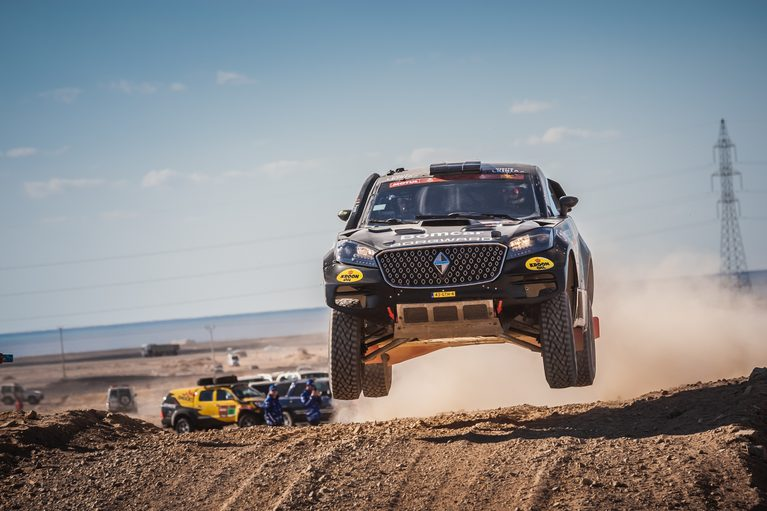
Wevers Sport was commissioned to develop a new rally car for the 2018 Dakar. Under the skin, little changed compared with the HRX Ford; the real change was in the bodywork. For that, Wevers Sport brought in Van Thull Development, which redesigned the entire body in just a few months and made all the moulds and parts in carbon and carbon-Kevlar. In 2018 and 2019 the Borgward BX7 DKR contested the Dakar, followed in 2020 by the BX7 DKR EVO.
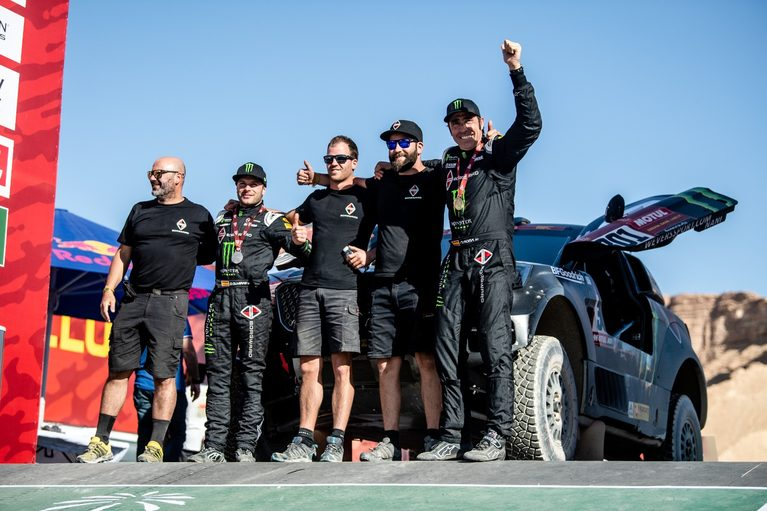
In 2018, Fuchs immediately showed what the car could do, with a top-3 stage result and a place in the top 10 around the rest day. Erik Wevers brought the second car safely to the finish. In 2019, Erik, together with Ashley Garcia, started as the only Borgward. In 2020 came the next step: the new BX7 DKR EVO went to two drivers of note, two-time Dakar winner Nani Roma and Ricardo Porém, with Wevers Sport as the team that ran and supported the cars in Saudi Arabia. With such a name in the car, everything got bigger and the bar was suddenly higher.
In the end it wasn’t the car that was the problem but the market. Borgward’s sales disappointed and the programme was scaled back. The idea was good; the road car just didn’t catch on in Europe.
A chance conversation in Saudi Arabia
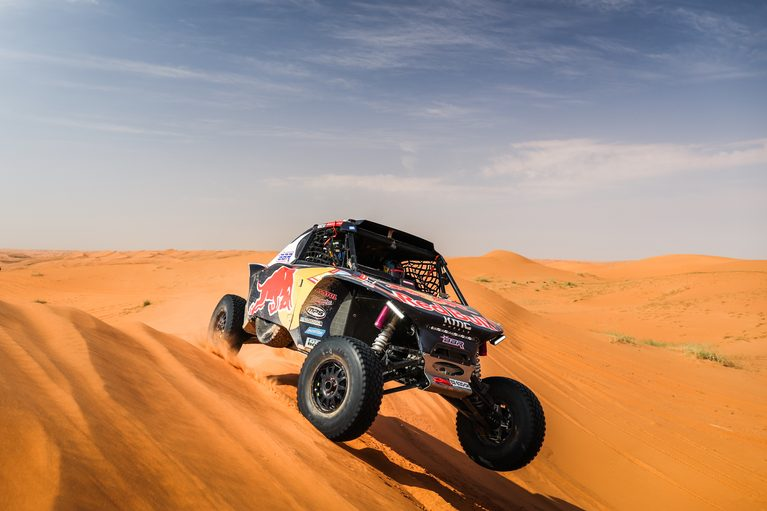
After Borgward, things went quiet around the Dakar in Markelo. Then in 2022 the French MCE-5 appeared, first in the Andalucía Rally and in 2023 in the Dakar. The Red Bull Off-Road Junior Team ran the car with, among others, Mitch Guthrie Jr., who won several stages with it. Before that, the light Challenger class (T3) had been dominated by the Can-Am X3.
Erik Wevers was at the Dakar himself in 2023 and by chance got talking to the people at MCE-5. The plan was modest: buy six cars and go to the Dakar as a team. But MCE-5 asked whether Wevers Sport wanted to join the project itself. In mid-2023 the Taurus was born, and purchasing and production moved to Markelo.
T1 or Challenger: what’s the difference?
The Dakar has several car classes. In T1 and T1+, the big prototypes from the likes of Toyota, Ford, Dacia and Mini compete, often factory teams with budgets to match. The Challenger class is the light, affordable version: buggies of around 900 kilos with a small turbo engine, far cheaper to build and maintain. That is exactly why the class suits private teams racing for their passion. It doesn’t mean it’s a second-rate class: the Challengers are competitive and can even take on the T1s on certain stages.
Taurus: from 9 to 17 cars in three years
What followed happened fast. In 2024, nine Taurus cars were on the start line. That year Wevers Sport supported both the Taurus factory team and the Energylandia Rally Team, three crews each. Cristina Gutiérrez won the Challenger class on the final stage after teammate Mitch Guthrie had bad luck. In 2025, Nicolás Cavigliasso took the win. In 2026, 17 Taurus cars lined up and Pau Navarro won for the team. At that most recent edition, Taurus even took the first four places in the Challenger class. In total, 60 cars have now been built, split between the EVO and the EVO Max.
The explanation lies in price and service. The Taurus is an affordable class compared with T1 or T1+, and parts supply and aftersales are better than the competition’s. Anyone racing for fun doesn’t want worries. With the experience from regular rallying, where Wevers Sport supplied VAG group parts for the Polo R5 and the Fabias, among others, the team tries to take as many of those worries away as possible. Customers order parts through a webshop and can turn to Markelo for technical support, like a helpdesk. The 59 cars not in the team’s own hands are all with customers.
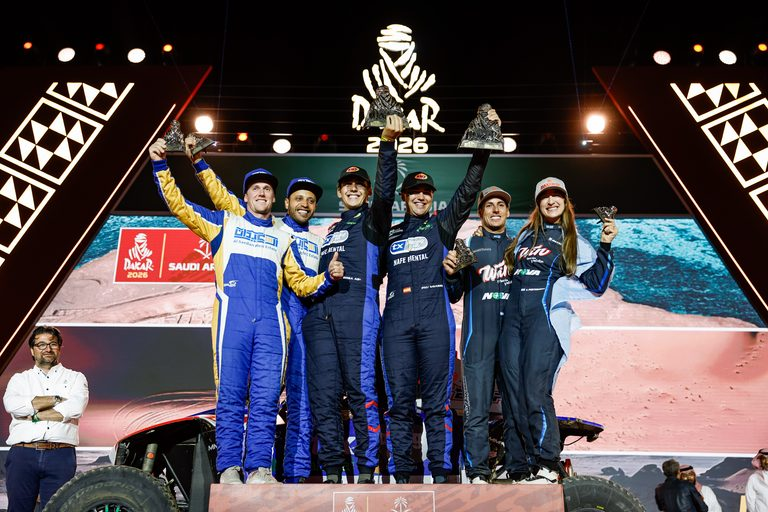
Notably, 2024 was the only year Wevers Sport itself ran cars as a factory team. From 2025 the team only goes to the Dakar with a support truck full of parts and an engineer, precisely so as not to compete with its own customers. In effect it’s the same principle as in 2010: the drivers drive, Wevers Sport makes sure they can keep going.
Floor Maten: the linchpin behind Taurus
Ask who keeps this machine running and you end up with Floor Maten. She knows the Dakar from the inside: for years she was assistant team manager at HT Rally Raid, alongside Henk Hellegers. At Wevers Sport she now runs the Taurus project from Markelo, where all the parts and all the cars are made, like a small factory. She makes sure enough people are in the workshop at peak moments, that stock is in order, that suppliers deliver on time and that quality checks and assemblies are right. In two years, around 50 cars were built this way.
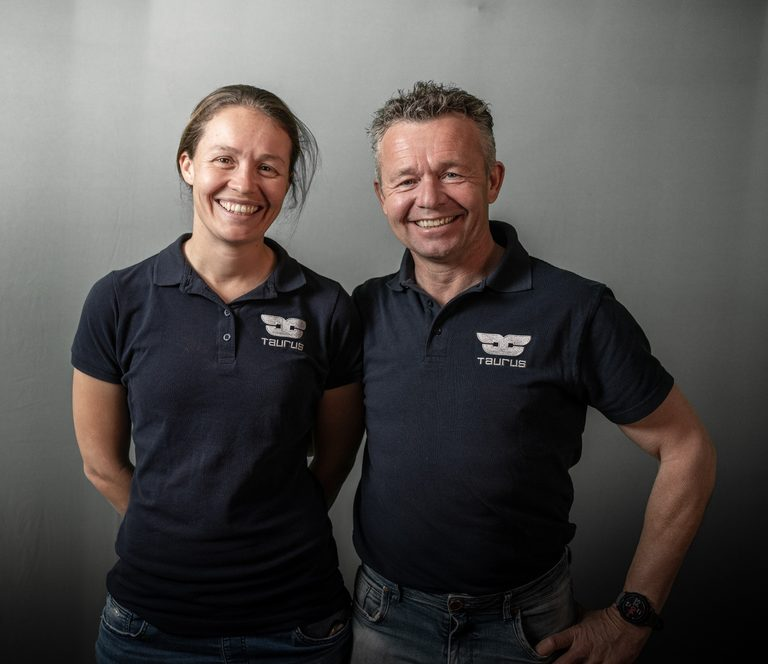
In 2024, Floor went along herself as navigator in Anja van Loon’s Iveco truck, together with mechanic Marije van Ettekoven. The trio finished twelfth out of 48 truck teams. Since then she has travelled along as team manager, and for the 2026 Morocco Desert Challenge she lined up alongside Erik Wevers in a Taurus T3 EVO Max.
The common thread
What connects the Racing Lancer of 2010 with 17 Taurus cars in 2026? According to Patrick Gerritsen, it is Erik’s passion for off-road, combined with Floor, who is every bit as off-road minded. The greatest success in the Dakar world is twofold: the 2011 Rallye du Maroc win with Bernhard ten Brinke and Taurus’ dominance in the Challenger class.
That it stays this way is not a given. The investments are enormous, and the road to an economically healthy business can be long, partly because Wevers Sport depends heavily on the FIA regulations. The wish is therefore clear: more competition in the Challenger class, so that Taurus can keep building on it. For a company that once started on a chicken farm, that is a great position to be in.